Shipping
FTL vs. LTL Shipping: Which One Is Right for Your Freight?
The differences between full truckload (FTL) and less-than-truckload (LTL) shipping, how pricing works for each, the 2025 freight class changes, and simple rules for choosing between them.
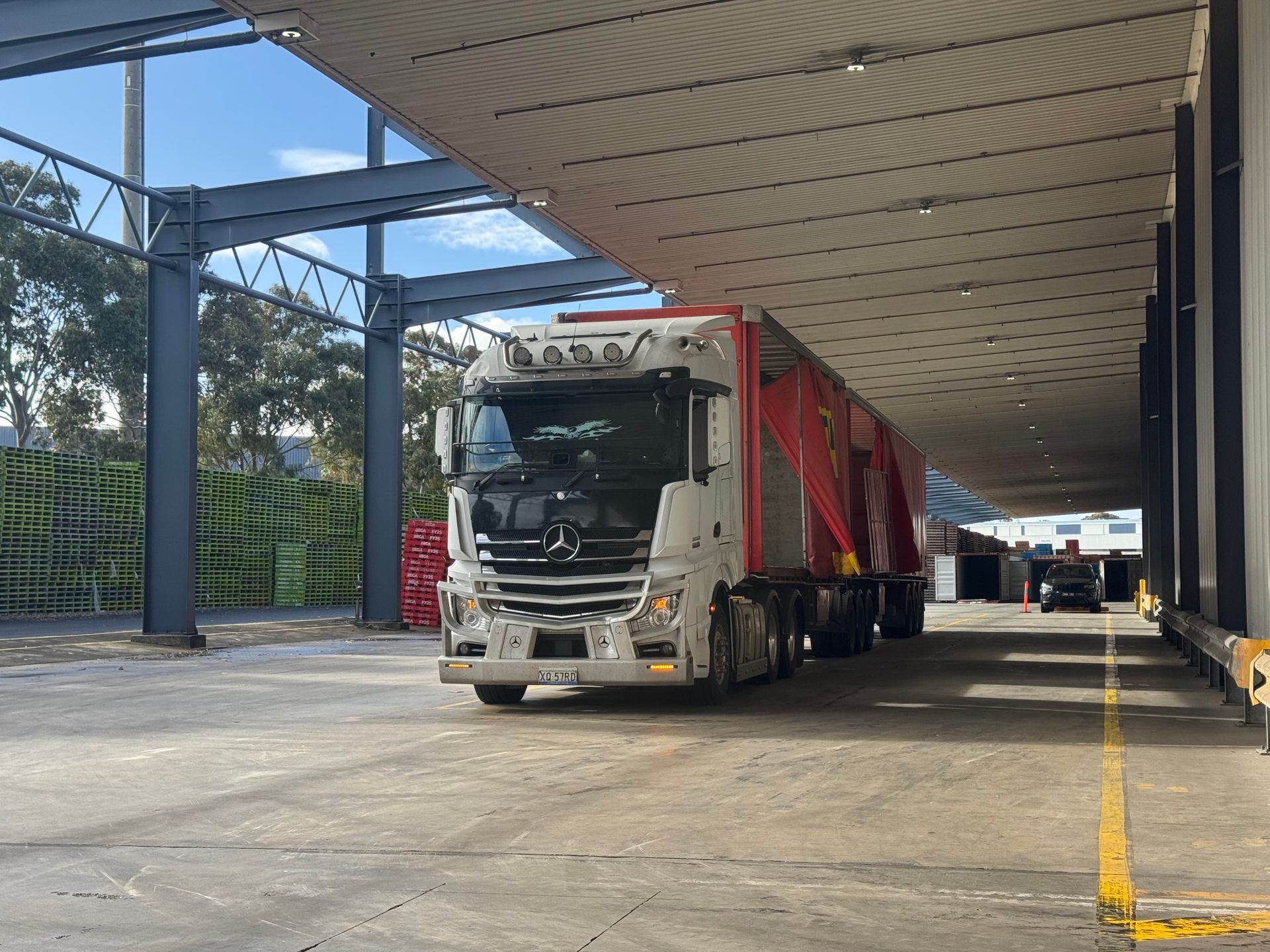
When you ship freight by truck, the first choice is usually between full truckload (FTL) and less-than-truckload (LTL). The right answer depends on how much you're shipping, how fast it needs to arrive, and how carefully it needs to be handled.
What is FTL?
With full truckload, you book an entire truck and trailer for your shipment. The driver picks up your freight and drives it straight to the destination. No other customers' freight is on the trailer.
You don't have to fill the whole trailer to use FTL. Many shippers book a full truck for a partial load because it's faster or safer.
What is LTL?
With less-than-truckload, your freight shares a trailer with other shippers' freight. You pay for the space and weight you use. LTL carriers run networks of terminals: your freight is picked up, taken to a terminal, sorted, often moved between more terminals, and then delivered.
Key differences
| FTL | LTL | |
|---|---|---|
| Typical size | Large shipments, often 10+ pallets, or freight that needs the whole trailer | Small shipments, often 1 to 6 pallets |
| Trailer | Dedicated to you | Shared with other shippers |
| Route | Direct, pickup to delivery | Through one or more terminals |
| Transit time | Usually faster and more predictable | Usually slower; depends on the network |
| Handling | Loaded once, unloaded once | Handled at each terminal |
| Damage risk | Lower | Higher, due to extra handling |
| Pricing | Mostly by lane, distance and equipment | By weight, freight class, distance and accessorials |
The pallet counts above are rough guides. Some carriers offer volume LTL or partial truckload for shipments in between, roughly 6 to 12 pallets.
How LTL pricing works: freight class
LTL rates depend heavily on freight class, set by the National Motor Freight Classification (NMFC). Classes range from 50 (dense, durable and easy to handle) to 500 (light, bulky or fragile). Higher classes cost more.
Big change in 2025: On July 19, 2025, NMFC changes took effect that moved many commodities to classification based mainly on density (pounds per cubic foot), using a new 13-tier density scale. If you ship LTL, the class for your products may have changed. Check with your carrier, and measure and weigh your pallets accurately to avoid reclassification charges.
How FTL pricing works
Full truckload pricing is simpler. It mostly depends on the lane, distance, equipment type, timing and market conditions, not freight class. See our guide on how truckload freight rates are calculated.
When to choose FTL
- You have enough freight to fill most of a trailer, or enough weight that LTL would cost about the same.
- The freight is fragile, high-value or easily damaged and you want it loaded and unloaded only once.
- You need fast, predictable transit and a set delivery time.
- The freight needs temperature control (reefer) or open-deck loading (flatbed).
- You want one point of contact and a driver you can track the whole way.
When to choose LTL
- You're shipping a few pallets at a time.
- You can accept longer, less exact transit times.
- The freight is well packaged and can handle extra handling.
- Cost matters more than speed.
A quick rule of thumb
If you're shipping more than about 10 to 12 pallets, or more than roughly 15,000 to 20,000 pounds, get an FTL quote alongside your LTL quote. FTL can come out about the same price, or even cheaper, while being faster and safer.
Tips for either option
- Know your numbers: pallet count, dimensions, weight and commodity.
- Package well: stack and wrap pallets securely, and label everything clearly.
- Share dock details: dock hours, appointments, and whether a liftgate is needed.
- Ask about accessorials before you book.
Need a full truckload?
Falcon Eye Trucking moves full truckload dry van, reefer and flatbed freight across the lower 48, with 24/7 dispatch and one point of contact. Request a quote.
Sources
- National Motor Freight Traffic Association (NMFTA): 2025 NMFC changes
- NMFTA: Docket 2025-1 news release
This guide is general information, not legal, tax or compliance advice. Rules and fees change, so check the official sources linked above before you file anything. Last reviewed October 14, 2026.
Need freight moved, or looking to drive?
Falcon Eye Trucking is a South Carolina carrier with 24/7 dispatch. Call (201) 582-0223 or reach out online.